How Much Weight Can a Patio Cover Hold for Fans, Lights, and TVs?
A well-built patio cover can carry ceiling fans and lights, and sometimes a TV, but there is no single pound rating. Each item is limited by what it hangs from: a fan by its rated box, a TV by its mount and the framing behind it. Plan them before the roof goes up, and have a licensed contractor confirm the details.
TLDR:
- There is no one weight limit for a patio cover. Each item you hang has its own limit.
- A fan-rated electrical box cannot support a ceiling fan heavier than 70 pounds.
- Under a cover, use fans and lights rated for damp locations. Near the open edge, step up to wet-rated.
- A TV is limited by its mount rating and by what the mount is fastened to.
- In a storm, wind can push up on a porch roof with several times the force of the roof’s own weight.
- The easiest time to plan fans, lights, and a TV is before the roof panels go up.
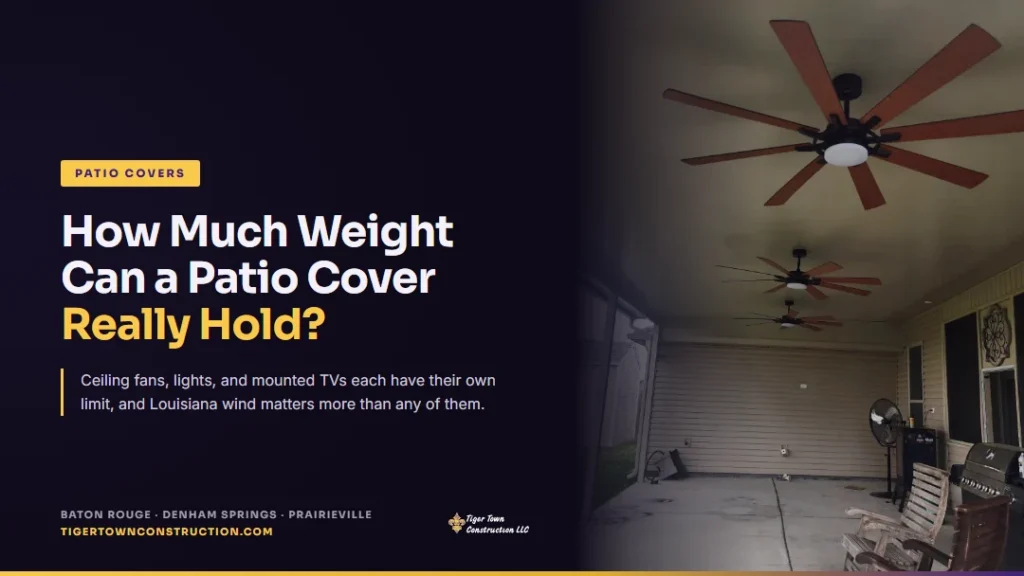
Around Baton Rouge, Denham Springs, and Prairieville, a covered patio does not get used much without a fan. Most families want lights for evenings and plenty want a TV for game day. So the question we hear on site visits is simple: can the cover hold all of that? The honest answer is yes, in most cases, if each piece is planned for and hung from the right thing.
Planning a fan, lights, or a TV under your new cover? Tell us what you want to hang, and we will plan the cover around it with a clear, itemized quote.
The Weight a Patio Cover Is Already Built to Carry
Before anything gets hung under it, a patio cover is already carrying loads. Knowing what they are makes the fan and TV question easier to answer.
The first is the cover’s own weight: the roof panels, beams, posts, and fasteners. Florida’s Division of Emergency Management notes in its Hurricane Retrofit Guide for porches and attached structures that a porch roof usually weighs 10 pounds per square foot or less.
The second is what building codes call live load, which is weight that comes and goes. A 2016 Journal of Light Construction code column on roof live loads explains that the residential code has roofs designed for the greater of a set live load or the local snow load. On a roof, live load mostly means workers, tools, and materials during construction or repairs.
Neither of those is a rating for hanging things from the underside. That is why the answer comes down to each item and what it attaches to.
Ceiling Fans: The Box Is the First Limit
A ceiling fan is the most common thing hung from a patio cover, and the electrical code gives it a clear upper limit. Here is how that limit works.
Per a 2018 EC&M code Q&A on boxes for ceiling-suspended fans, based on the 2017 National Electrical Code, a box that carries a paddle fan must be listed and marked for fan support. That box cannot support a fan heavier than 70 pounds. For a fan over 35 pounds, the box has to be marked with the maximum weight it supports, or the fan must be supported independently of the box.
Most outdoor fans sit in the lighter ranges, but always check the spec sheet for your fan’s weight, with any light kit included. Your electrician should confirm the requirements of the code edition in force where you live.
Where the Fan Box Attaches Matters Too
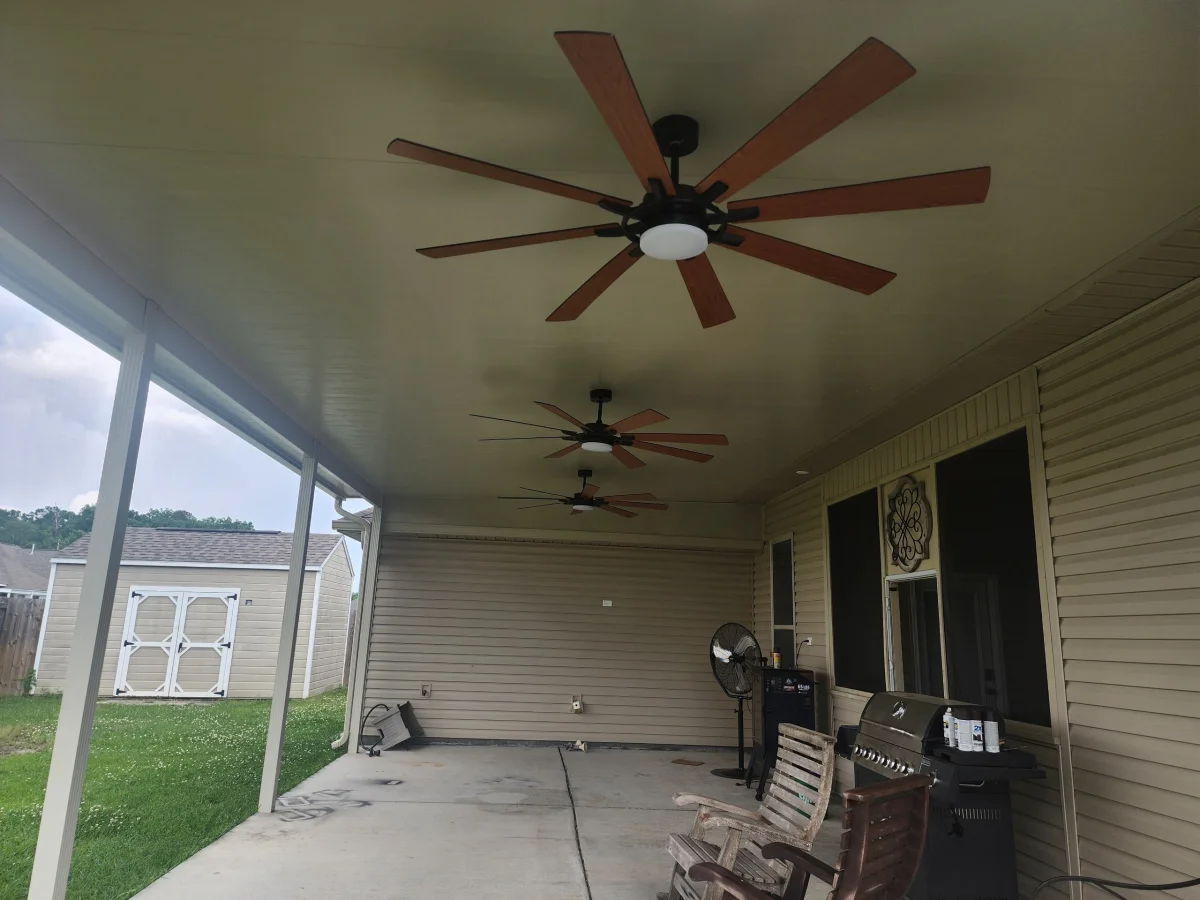
The code rule covers the box. Under a patio cover, the box also has to be fastened to something solid. On our insulated patio covers, the solid insulated panel gives a ceiling that is ready for fans, lights, and a finished look underneath.
A spinning fan also moves and wobbles, so a loose mount gets looser over time. Plan where each fan goes before the roof is built, so the support and the wiring path are part of the design, not an afterthought.
Pick a Fan Rated for the Spot
Weight is not the only label to check. Hunter Fan’s 2024 guide to damp-rated and wet-rated outdoor fans says damp-rated fans belong in covered spaces where rain does not reach them. It adds that a fan near the edge that could get wet from wind-driven rain is better off wet-rated.
Our summer storms blow rain sideways, so that edge advice fits Louisiana well. A fan deep under the cover is a damp-location fan. A fan near the open side may need a wet rating.
Lights: Light Loads, Same Planning
Lights weigh much less than fans, so weight is rarely what limits them. The planning still matters, because every fixture needs power and a safe place to mount.
Common choices under a cover include recessed or surface downlights, a light kit on the fan, and string lights. Use the same damp or wet logic as the fan: check the fixture’s label against where it will hang. Have a licensed electrician run the wiring, and decide where switches go before the roof goes up.
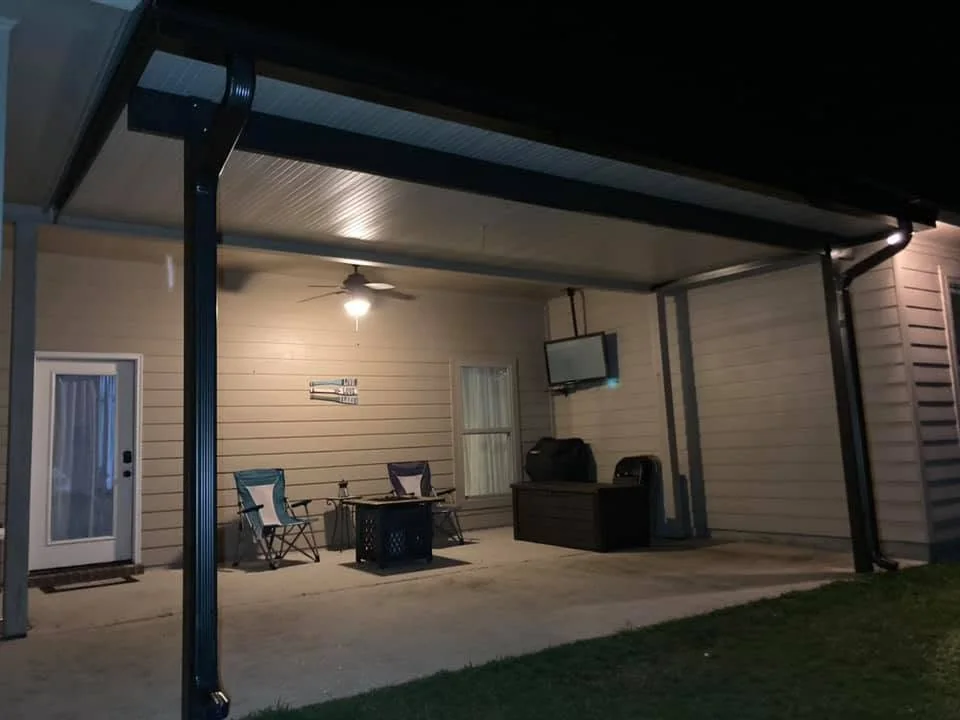
String lights are the lightest load of all. Run them from posts and beams rather than from thin trim, and take them down or check them before a big storm.
Want the fans and lights planned in from day one? We map out fan spots and lighting with you before the cover is built, so nothing gets added as an afterthought.
Mounted TVs: The Mount and the Wall Behind It
A TV is heavier than a fan or a light, and it does not hang straight down from one point. It sits on a mount, often an arm that sticks out from the wall. That makes the mount, and what it is fastened to, the limit.
A 2022 UL Standards & Engagement article on wall and ceiling mounts explains that UL 2442 covers mounts for flat-screen TVs. For TVs of 100 pounds or less, it says a mount is tested to at least four times its weight rating.
That rating only helps if the mount is fastened to something that can hold it. A common approach is to mount the TV on the back wall of the house or on masonry, where the mount can be fastened into solid structure, rather than on the cover itself. If you want a TV on a post or hung from the cover, talk it through on the site visit before anything is built.
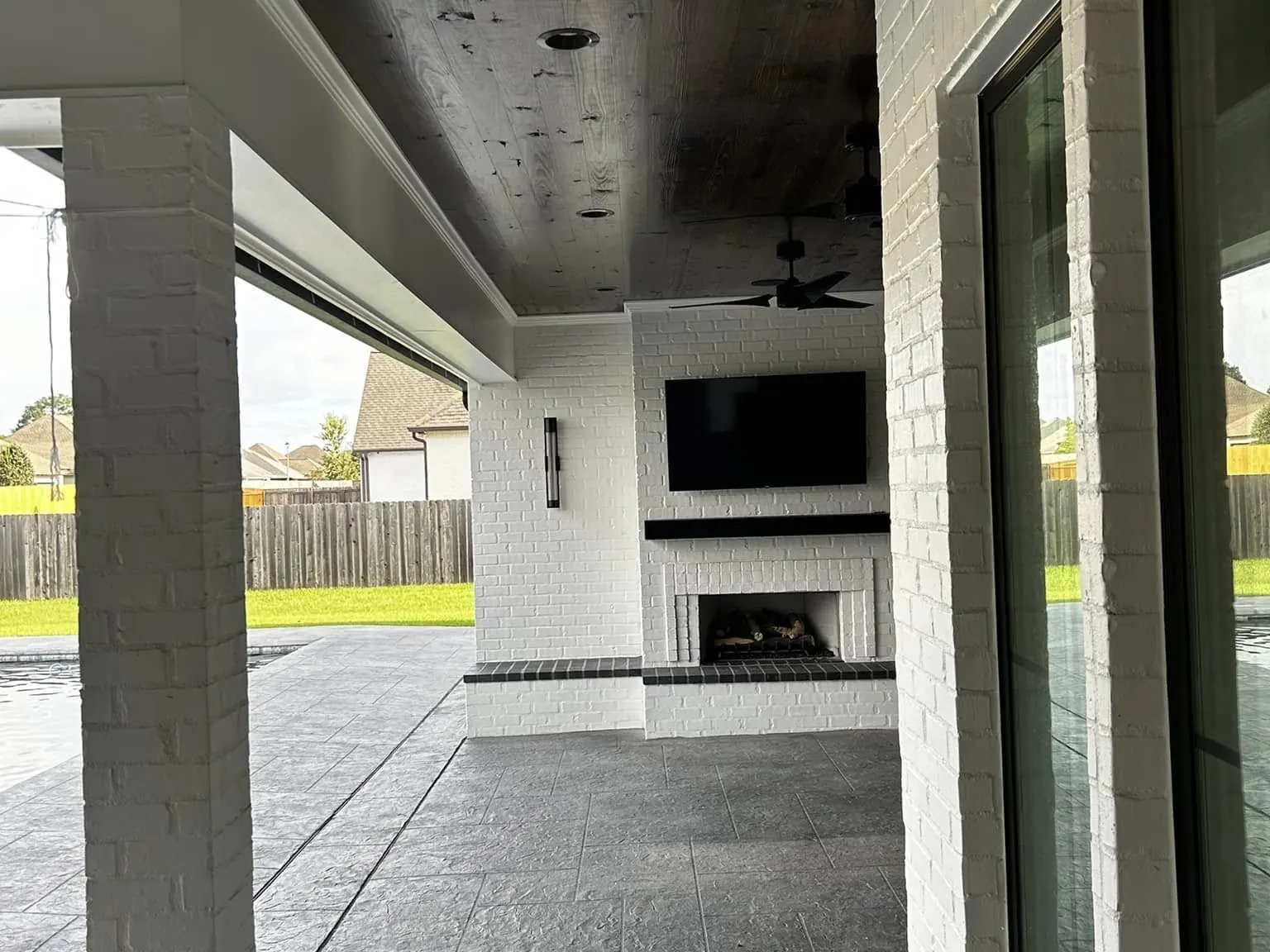
Before you buy, check two numbers: the TV’s weight on its spec sheet and the mount’s rated load. Then ask what the mount will be fastened into.
Why Louisiana Wind Matters More Than Anything You Hang
Fans, lights, and a TV add some weight. A storm adds far more force, and it pushes up, not down. That is the load a patio cover in our area is really built around.
The same Florida hurricane retrofit guide says wind uplift on a porch roof may run 32 to 59 pounds per square foot. That is several times the 10 pounds per square foot or less a porch roof usually weighs. The guide adds that posts must be well connected to the roof or beam above and to the foundation below.
Next to that wind load, the weight of a fan is small. That does not make the fan unimportant. It means the posts, beams, and connections that hold the roof down in a storm matter most of all.
We build every patio cover to handle Louisiana wind and building code, anchored to last. If you are adding heavy items or making changes to an existing cover, have a licensed contractor or engineer confirm the design first.
What to Check Before You Hang Anything
A short checklist keeps the fan, light, and TV plan on track. These are the items worth settling at the site visit.
| Item | What sets the limit | What to confirm |
|---|---|---|
| Ceiling fan | The rated box and what it is fastened to | Fan weight with light kit, box rating, damp or wet rating |
| Lights | Fixture mounting and wiring | Damp or wet rating, switch locations |
| String lights | Attachment points | Hang from posts and beams, not thin trim |
| Mounted TV | Mount rating and the wall or framing behind it | TV weight, mount rating, mounting surface |
| Anything heavy or unusual | The cover’s design | Confirmation from a licensed contractor or engineer |
If an item does not fit neatly in a row, that is a sign to ask before you buy it.
A few more questions help:
- Insulated or not? A solid insulated roof gives a finished ceiling for fans and lights. Our non-insulated patio cover options suit simpler shade, so ask how fans would mount on the one you pick.
- Where will the wiring run? It is easier to plan before the panels go on.
- Who does the electrical work? Use a licensed electrician for wiring, boxes, and fixtures.
For a look at a finished build, see this insulated cover on a Prairieville home. Tiger Town is a father-and-son team with the owner on every job, so the person planning your fan spots is the person building the cover.
Common Questions About Hanging Fans, Lights, and TVs From a Patio Cover
These are the questions homeowners ask once they start picturing the finished space. Most come back to the same idea: each item has its own limit, set by what it hangs from.
How much weight can a patio cover hold?
There is no single number. A patio cover is designed for its own weight, code live loads, and wind, not for a set hanging rating. What you hang under it is limited item by item: a fan by its rated box, a TV by its mount and the framing behind it. A licensed contractor can confirm the limits for yours.
Can I put a ceiling fan on my patio cover?
In most cases, yes. Our insulated patio covers give a solid ceiling that is ready for fans and lights. The fan needs a box listed for fan support, and by code that box cannot carry a fan over 70 pounds. Plan the fan location before the roof goes up so support and wiring are built in.
What kind of fan should go under a patio cover?
Use a fan rated for outdoor use. A damp-rated fan suits a spot deep under the cover where rain does not reach it. If the fan sits near the open edge, where wind-driven rain can hit it, a wet-rated fan is the safer choice. Check the label before you buy.
Can I mount a TV on my patio cover?
Sometimes, but the house wall is often the simpler spot. A TV mount is only as strong as what it is fastened to. Check the TV’s weight and the mount’s rated load, then ask your contractor what the mount will attach to. Settle this before the cover is built if you can.
Is wind a bigger concern than the weight of a fan or TV?
Yes. Florida’s hurricane retrofit guide says wind uplift on a porch roof may run 32 to 59 pounds per square foot, several times what the roof weighs. A fan or TV adds a small load next to that. The posts and connections that hold the roof down in a storm matter most.
Can I add a fan or lights to a patio cover later?
Often you can, but it is easier to plan them from the start. Adding a fan later means finding a solid support and a wiring path through a finished ceiling. Ask a licensed contractor and electrician to look at the cover first, so the new fan is mounted to something built to carry it.
Get a patio cover planned around how you will use it. We come out, measure, and map out fans, lights, and TV spots with you, then give you a clear, itemized quote. No pressure, and the owner is on every job.