Picking the Best Screen for a Louisiana Screened-In Porch
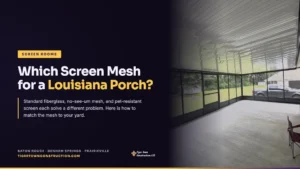
There is no single best screen. Standard fiberglass is the usual pick for large porch openings and stops mosquitoes. No-see-um mesh has a tighter weave for the tiny biting midges that pass through regular screen. Pet-resistant screen is built to take claws and paws. The right one depends on which of those three problems you have.
TLDR:
- Screen mesh is named by its strand count per inch, such as 18×14 or 20×20.
- Standard fiberglass screen is the common choice for big porch and patio openings.
- No-see-um mesh is woven tighter to keep out insects that fit through regular screen.
- A tighter weave means smaller openings, so it gives up a little air and view.
- Pet-resistant screen is made to resist tears and punctures from dogs and cats.
- The mesh is easiest to choose before the room is built, not after.
Around Baton Rouge and across South Louisiana, a porch has more than one thing trying to get in. Mosquitoes come first, then gnats and love bugs, and in some yards the no-see-ums you feel before you ever see them. Add a dog that wants out, and one roll of screen is being asked to do three jobs.
Building a screen room and not sure which mesh you need? We look at your yard, ask what bothers you most, and talk through the mesh options at your quote.
How Screen Mesh Is Measured
The numbers on a roll of screen tell you how tight the weave is. Once you can read them, the rest of this guide gets simple.
Mesh is described by two numbers, such as 18×14. That means 18 strands per inch in one direction and 14 in the other. A higher count means more strands in the same inch, and that means smaller holes.
Smaller holes stop smaller insects. They also leave less open space for air and light to pass through. Every mesh choice is a trade between those two things.
The three meshes below sit at different points on that trade. Start with the one most rooms use.
Standard Fiberglass: The Usual Pick for Large Openings
Most screen rooms start here. Fiberglass screen is light, flexible, and made for the wide spans a porch or patio enclosure has.
Screen maker Phifer describes its 18×14 fiberglass pool and patio screening as durable, breathable fiberglass and “an excellent choice for screening a large area.” That is the job a screen room wall asks of it.
This weave stops mosquitoes, flies, and love bugs. It also keeps the most open feel of the three, so a ceiling fan and a cross breeze still do their work.
Where it falls short is at the two extremes. The smallest biting insects can fit through it, and a determined dog or cat can tear it. If neither of those is your problem, standard fiberglass is likely all you need.
No-See-Um Mesh: A Tighter Weave for the Smallest Biters
If you get bitten on a screened porch and never see what did it, this is the mesh to ask about. The problem is size.
A University of Florida IFAS publication on biting midges, also called no-see-ums, puts the adults at just 1.0 to 2.0 millimeters long. The same guide states that “regular window screens do not exclude biting midges from indoor areas.”
It also notes that most species bite at dusk, at night, or in the morning. Those are the same hours most people want to be out on the porch.
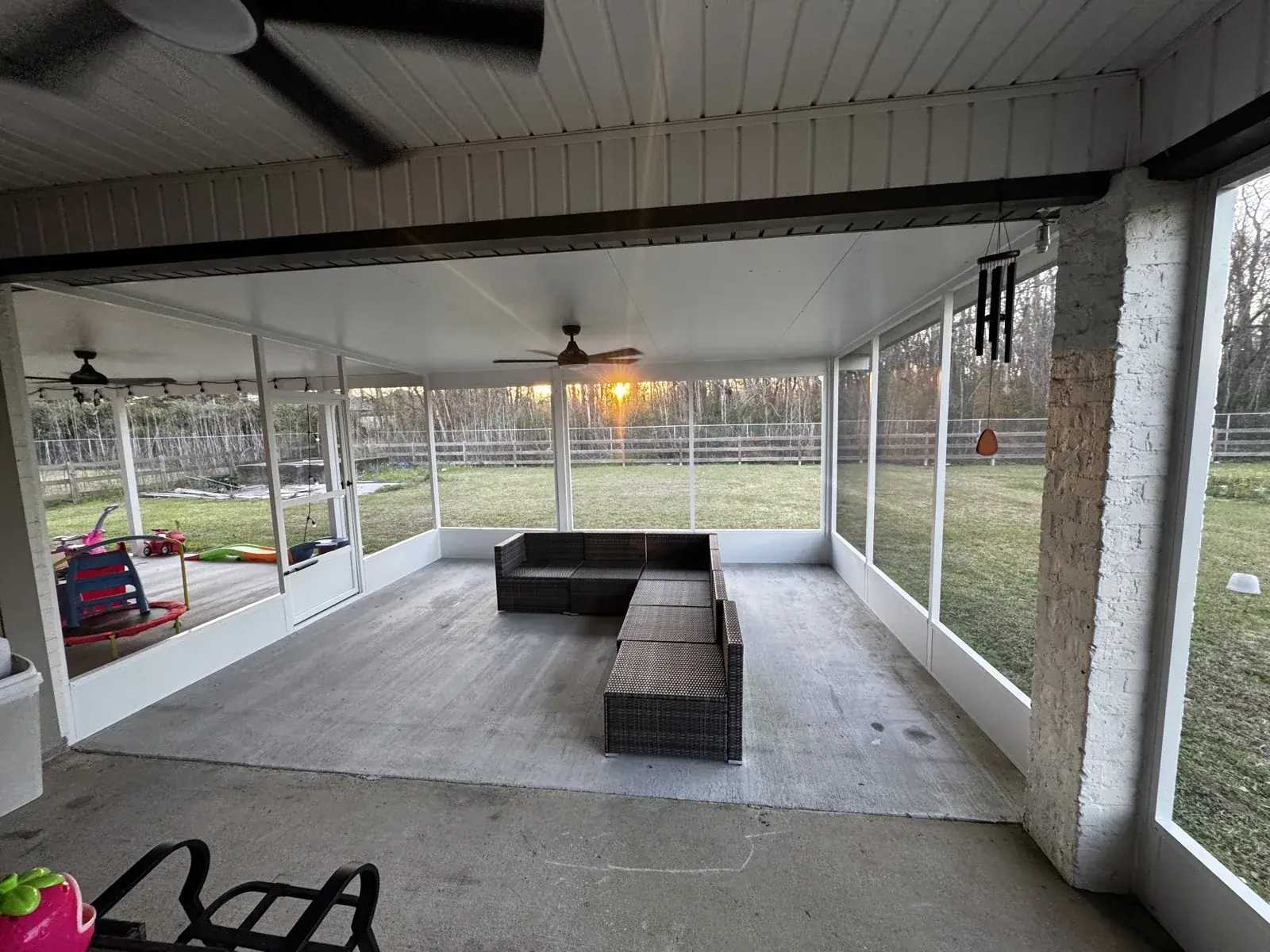
No-see-um mesh answers that with a tighter weave. Phifer says its 20×20 No-See-Ums screening “keeps out most tiny bugs and allows cool breezes to flow through.”
Note the word “most.” A tighter weave cuts down what gets in. It also has smaller openings than standard screen, so expect a little less air and a slightly dimmer view.
Getting bitten on a porch that is already screened? Tell us what you are dealing with. We use a tight, heavy-duty mesh built for our climate, and we can talk through finer mesh options at your quote.
Pet-Resistant Screen: Built for Claws and Paws
Insects are not the only thing that tests a screen. In a lot of homes, the first damage comes from inside the room.
Pet-resistant screen uses heavier strands than standard fiberglass. Phifer describes its PetScreen product as “designed to be tear and puncture-resistant to resist damage by most dogs and cats,” and calls it ideal for high-traffic areas.
The same page lists patio and porch enclosures, windows, and doors as places to use it. It also says the screen provides good outward visibility.
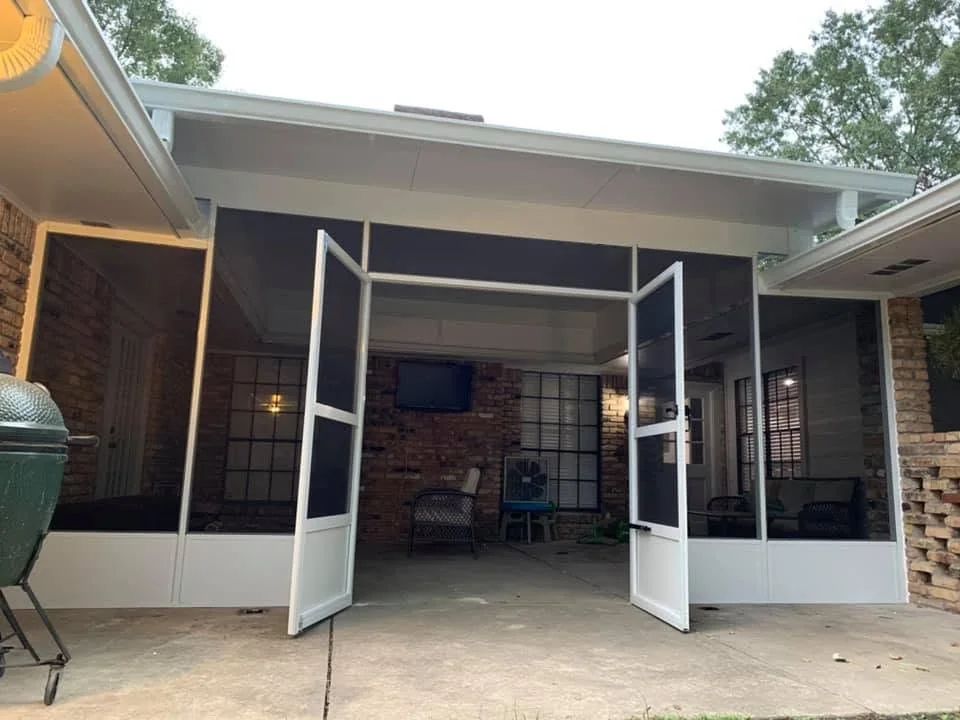
The heavier strands are the trade. They are what resist the claws, and they are also more visible than a fine fiberglass strand. Think about where the wear will happen before you put it on every wall.
The Three Meshes Side by Side
Here is the short version of everything above. Use it to match a mesh to the problem you have.
| Mesh | What it is for | What you give up |
|---|---|---|
| Standard fiberglass (such as 18×14) | Large openings. Stops mosquitoes, flies, and love bugs. | The smallest biting insects can pass. Pets can tear it. |
| No-see-um mesh (such as 20×20) | Tiny biting midges that fit through regular screen. | Smaller openings, so a little less air and view. |
| Pet-resistant screen | Dogs, cats, kids, and busy doorways. | Heavier strands that are easier to see. |
No row in that table wins outright. Each mesh is the best answer to one problem and an average answer to the other two.
If you landed on the last row, the next section is for you.
How to Choose for Your Yard
The right mesh comes from three questions. Answer them before you look at samples.
What is biting you now? If it is mosquitoes, standard screen handles it. If you are getting bitten and cannot see the insect, bring that up, because that points to a finer mesh.
Who lives in the house? A dog that scratches at the door, a cat that climbs, or small kids all change the answer. Wear is usually worst at the doors and along the bottom of the walls.
How much do you care about the breeze? A porch that depends on moving air may be better with the most open mesh that still solves your insect problem.
One room does not have to use one mesh. If you have more than one problem, ask at your quote about putting a tougher or finer mesh only where it is needed. If you want to close the room against rain and pollen too, Eze-Breeze vinyl panel windows are the step past screen.
Mesh is one decision among several. Our custom screen room service covers the frame, the roof, and the doors that go with it.
Common Questions About Screen Mesh for Louisiana Porches
These are the mesh questions homeowners ask before a screen room goes up. Most of them come down to which problem you are solving first.
What is the best screen for a screened-in porch in Louisiana?
It depends on the problem. Standard fiberglass screen suits most large porch openings and stops mosquitoes. No-see-um mesh is the pick when tiny biting midges are getting through. Pet-resistant screen is for homes where a dog or cat is hard on the screen. Many yards have more than one of those problems.
Will regular screen keep out no-see-ums?
Not reliably. A University of Florida IFAS publication on biting midges says regular window screens do not exclude them, because the adults are only 1.0 to 2.0 millimeters long. A screen made for no-see-ums has a tighter weave with smaller openings, which is what keeps most of them out.
Does no-see-um screen block the breeze?
It lets air through, but not as freely as a more open weave. More strands per inch means smaller openings. Most people notice a slightly softer breeze and a slightly dimmer view. If your porch depends on moving air, weigh that against how bad the biting insects are in your yard.
Is pet-resistant screen worth it?
If a pet has already torn a screen at your house, usually yes. It is made to resist tears and punctures from most dogs and cats. The strands are heavier, so the screen is a bit more visible. Many homeowners ask about using it at doors and low on the walls, where the wear happens.
What do the numbers 18×14 and 20×20 mean on screen?
They count the strands in one inch of screen, in each direction. An 18×14 mesh has 18 strands one way and 14 the other. A 20×20 mesh has 20 each way. The higher the numbers, the tighter the weave and the smaller the insect it can stop.
Can I change the mesh after my screen room is built?
Screen can be replaced, but it is easier to choose well the first time. The mesh affects how the room feels every day, from the breeze to the view. Raise your insect and pet concerns at the quote, so the mesh is part of the plan and not a repair later.
Tell us what gets through your screen now, and we will plan around it. We come out, look at the space, and talk through mesh, frame, and door options with you. No pressure, and the owner is on every job.